

We offer a full support service in water systems monitoring, establishing and maintaining measures which minimise Legionella bacteria growth within your hot and cold water systems.
Our services are in line with the requirements of HSG 274 (all parts) and include: –
- Design and application of monitoring and inspection services for hot and cold water
- Monitoring of temperatures within hot and cold water systems as an ongoing general control
- Monitoring of chemical residual dosed into systems for bacterial control
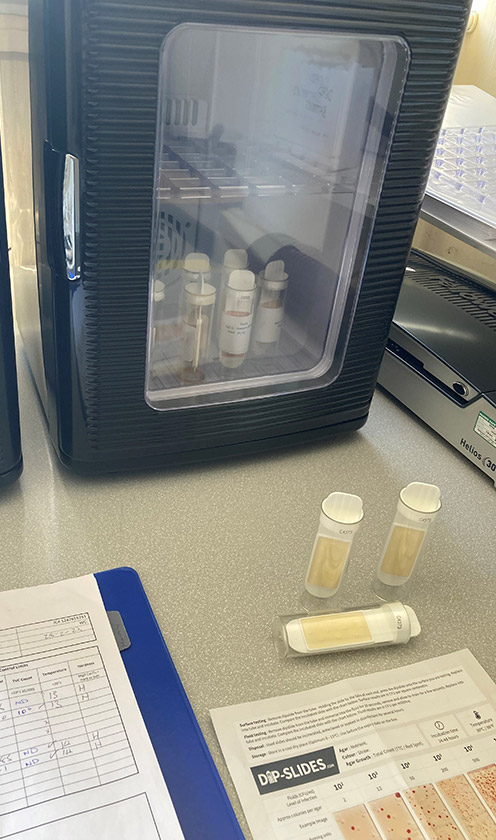
- Dip slide bacterial monitoring - used for microbiological monitoring of liquids and surfaces. Dip slides are commonly used for measuring bacteria levels.
- Laboratory analysis (off-site UKAS Accredited) – Sampling of water for bacteria including: -
- Legionella
- TVCC 22°C, 37°C
- E Coli
- Coliforms
- Pseudomonas
For more information, read our article on water systems monitoring by clicking on the link below


Kay facts about Water Systems Monitoring
Water systems monitoring refers to the process of continuously or periodically observing, measuring, and analysing various parameters related to water resources to assess their quality, availability, and overall health. Monitoring water systems is crucial for ensuring the sustainability, safety, and proper management of water sources, such as rivers, lakes, reservoirs, groundwater, and public water supply systems.
Key Parameters Monitored in Water Systems:
1. Water Quality: Monitoring various physical, chemical, and biological parameters to assess the quality of water, including pH, temperature, dissolved oxygen, turbidity, nutrient levels (nitrogen and phosphorus), heavy metals, bacteria, and other contaminants.
2. Water Quantity: Tracking the volume and flow rates of water in natural water bodies, reservoirs, and distribution systems. This helps in understanding water availability and identifying potential shortages or surpluses.
3. Water Level: Measuring water levels in rivers, lakes, and groundwater wells to monitor changes over time and to predict and respond to potential flooding or drought situations.
4. Water Usage: Monitoring water consumption patterns in urban areas, industries, and agriculture to optimise water use, identify wastage, and implement conservation measures.
5. Weather and Climate: Monitoring meteorological data such as rainfall, evaporation rates, and temperature to understand the impact of weather on water systems and to predict potential changes in water availability.
6. Water Infrastructure: Assessing the condition and performance of water infrastructure, including pipes, pumps, treatment plants, and reservoirs, to ensure efficient and reliable water supply.
Methods and Technologies Used for Water Systems Monitoring:
1. Water Sampling: Collecting water samples at various locations and analysing them in laboratories to measure pollutant levels and water quality indicators.
2. Remote Sensing: Using satellite imagery and aerial surveys to monitor large water bodies, track changes in water levels, and identify potential pollution sources.
3. Automatic Sensors: Deploying real-time monitoring stations equipped with sensors to continuously measure various water parameters and transmit data to central databases for analysis.
4. Telemetry Systems: Using wireless communication to transmit data from remote monitoring stations to central control centres, enabling timely decision-making.
5. Data Analysis and Modelling: Utilising statistical analysis and hydrological models to interpret monitoring data, predict future trends, and plan water management strategies.
6. Citizen Science: Involving the public in water monitoring efforts through community-based initiatives, mobile apps, and data collection programs.
Benefits of Water Systems Monitoring:
1. Early Detection of Contamination: Rapid identification of pollutants allows for timely action to prevent adverse impacts on public health and ecosystems.
2. Resource Management: Accurate monitoring data aids in the sustainable management of water resources and ensures an equitable distribution of water for various needs.
3. Environmental Protection: Monitoring helps track changes in water quality and quantity, supporting efforts to protect aquatic habitats and biodiversity.
4. Emergency Response: Real-time monitoring helps in responding to emergencies such as floods, droughts, or accidental contaminations promptly.
5. Policy and Regulation: Monitoring data provides valuable insights for policymakers to develop effective regulations and guidelines for water management and conservation.
In summary, water systems monitoring is essential for ensuring the sustainable use of water resources, protecting the environment, and safeguarding public health.
By adopting advanced technologies and proactive management strategies, water systems can be effectively monitored and managed to meet the needs of present and future generations.